Fresno State Physical Therapy and
Intercollegiate Athletics Building
Location
Fresno
Sq. Ft.
22,500
Year Completed
2015
Construction Partner
Bernards
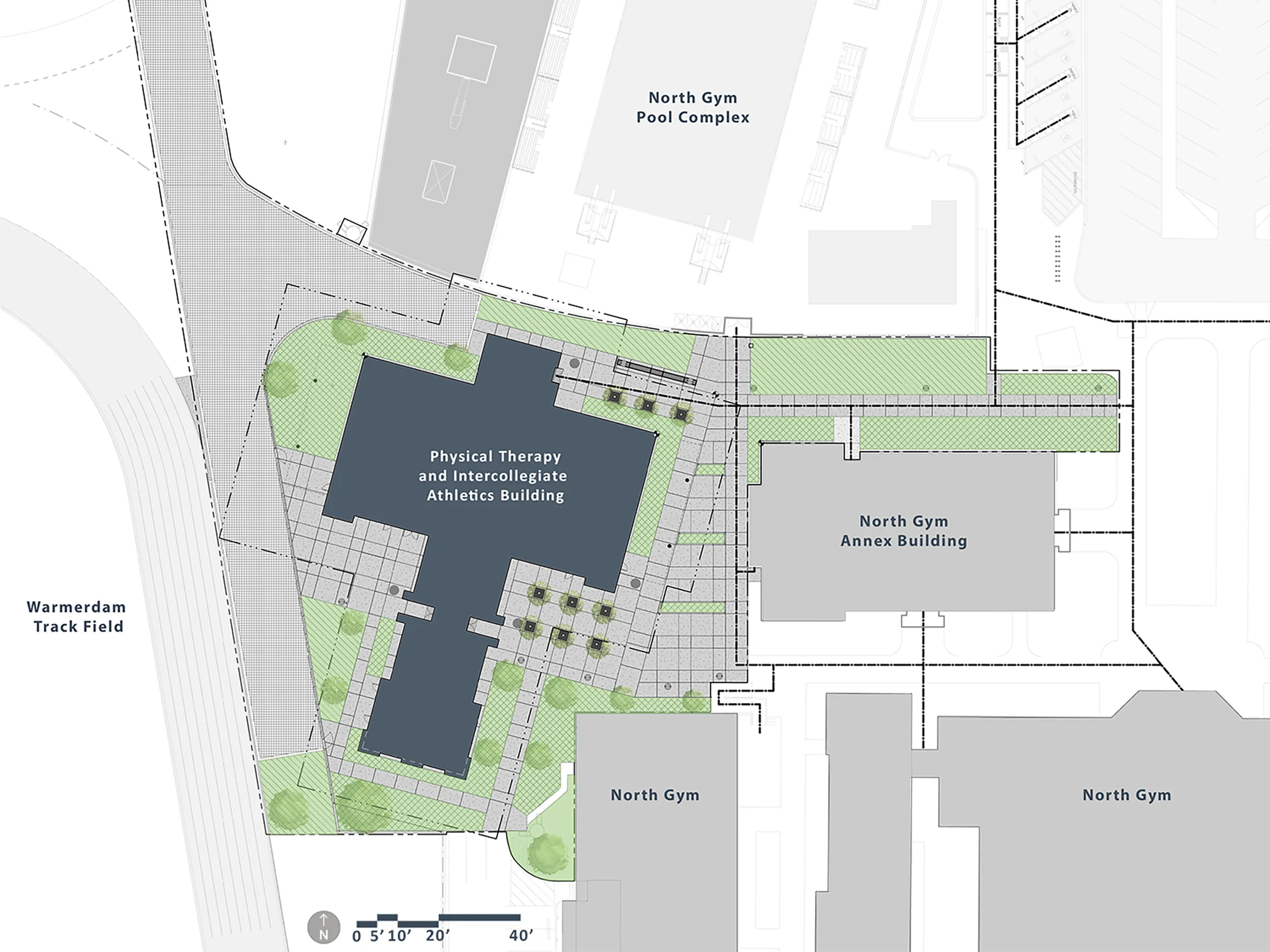
The new Physical Therapy and Intercollegiate Athletics (PTIA) Building on the campus of California State University, Fresno provides an interactive venue for academics, athletics, and the public to blend in a way that reinforces the mission of both programs and the University as a whole. The northwest quadrant of the campus contains some of the University’s most iconic athletic venues including Bulldog Stadium, Margie Wright Diamond, Warmerdam Track, and the Aquatic Complex. At the heart of the sports infrastructure is the North Gymnasium, one of the original campus structures. The PTIA’s primary function is to serve as a place to integrate academics and athletics. By co-housing the operational functions of team sports and the University’s new doctoral program in Physical Therapy, both vital components of Fresno State are elevated and improved.
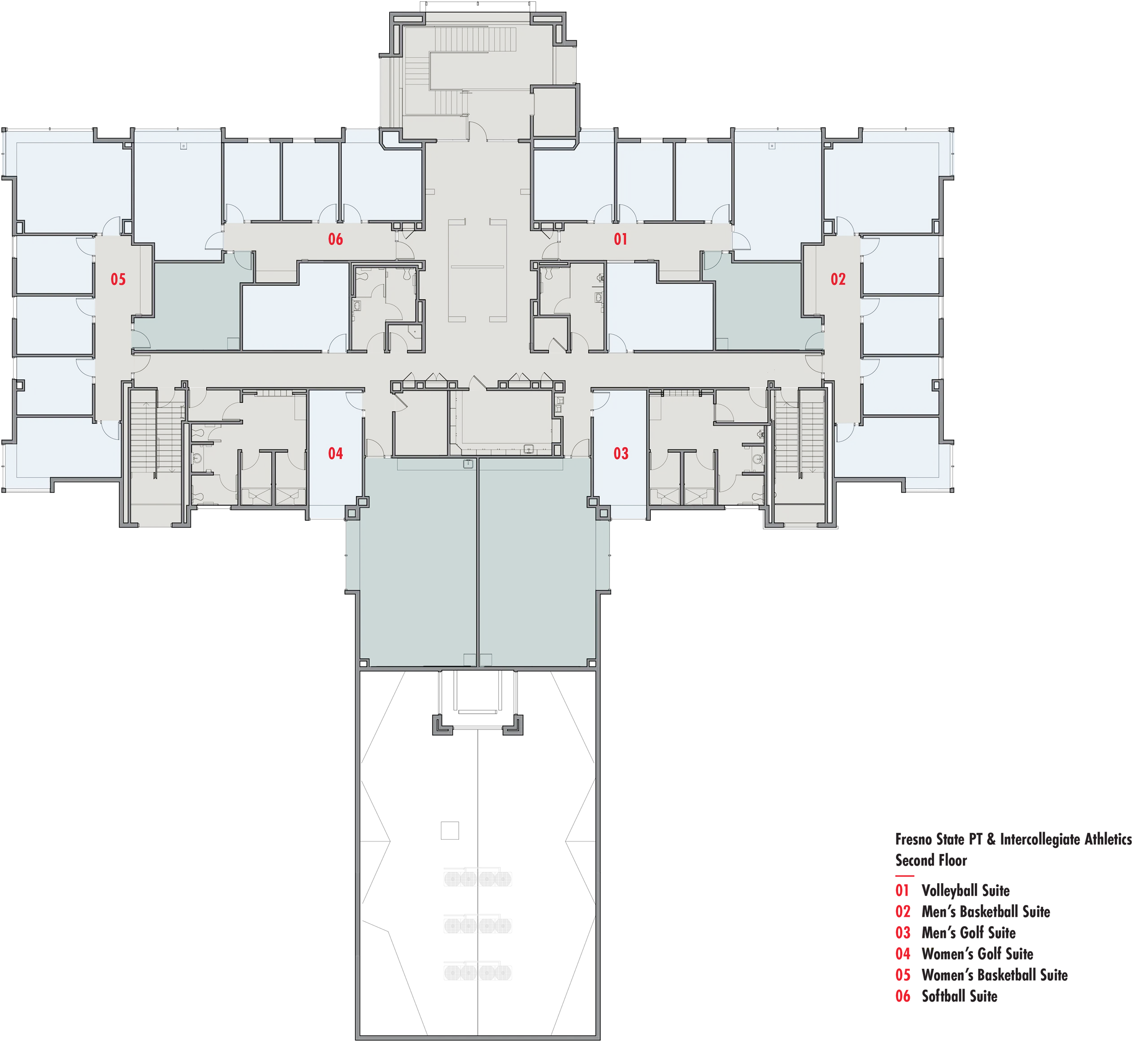
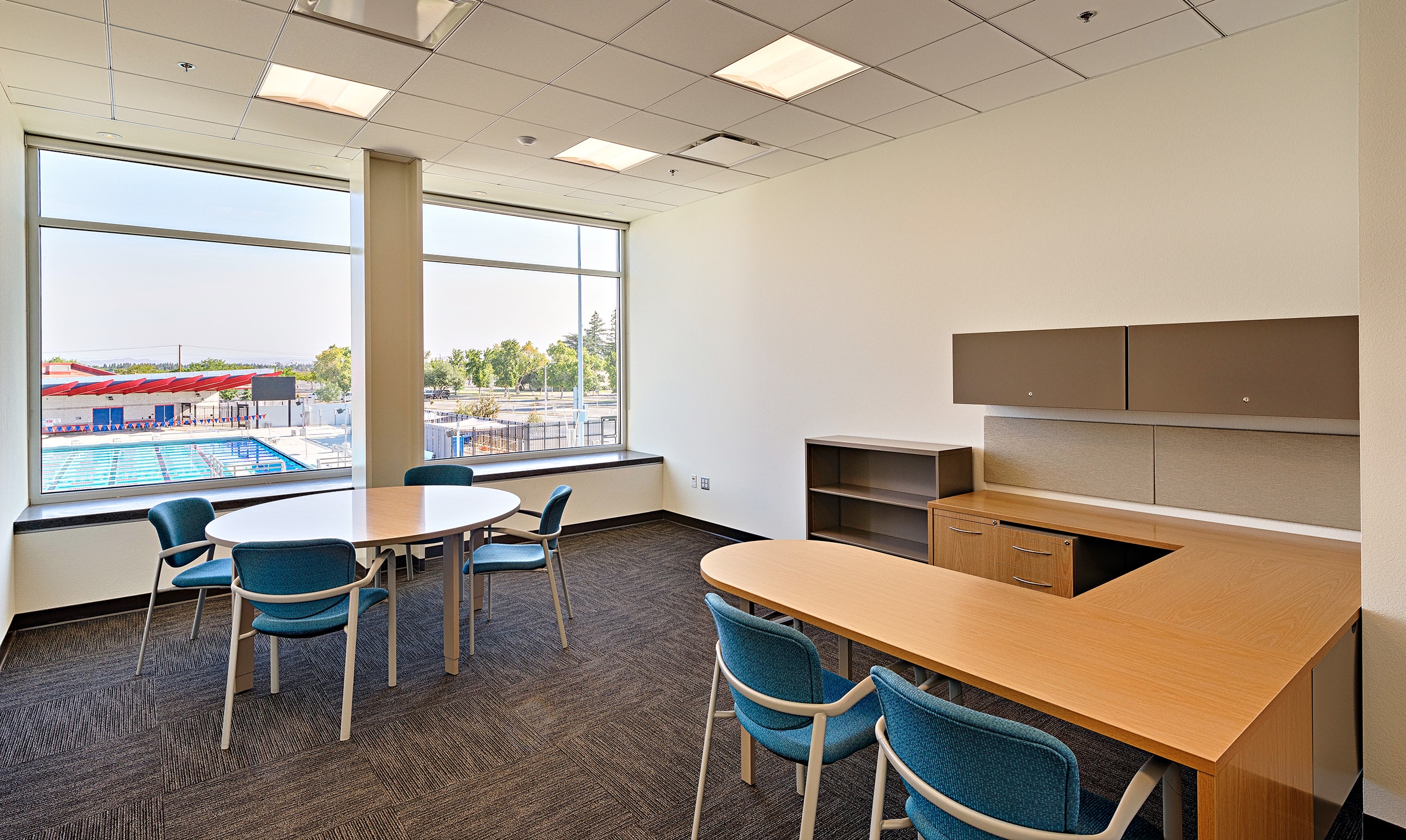
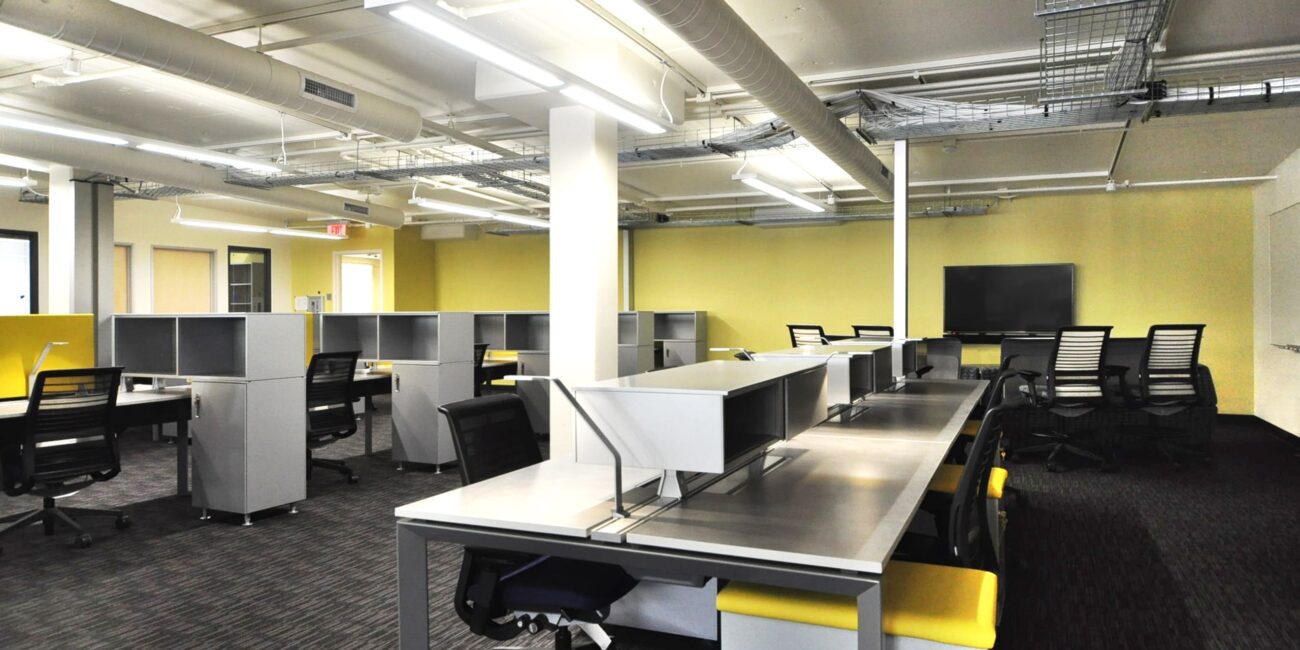
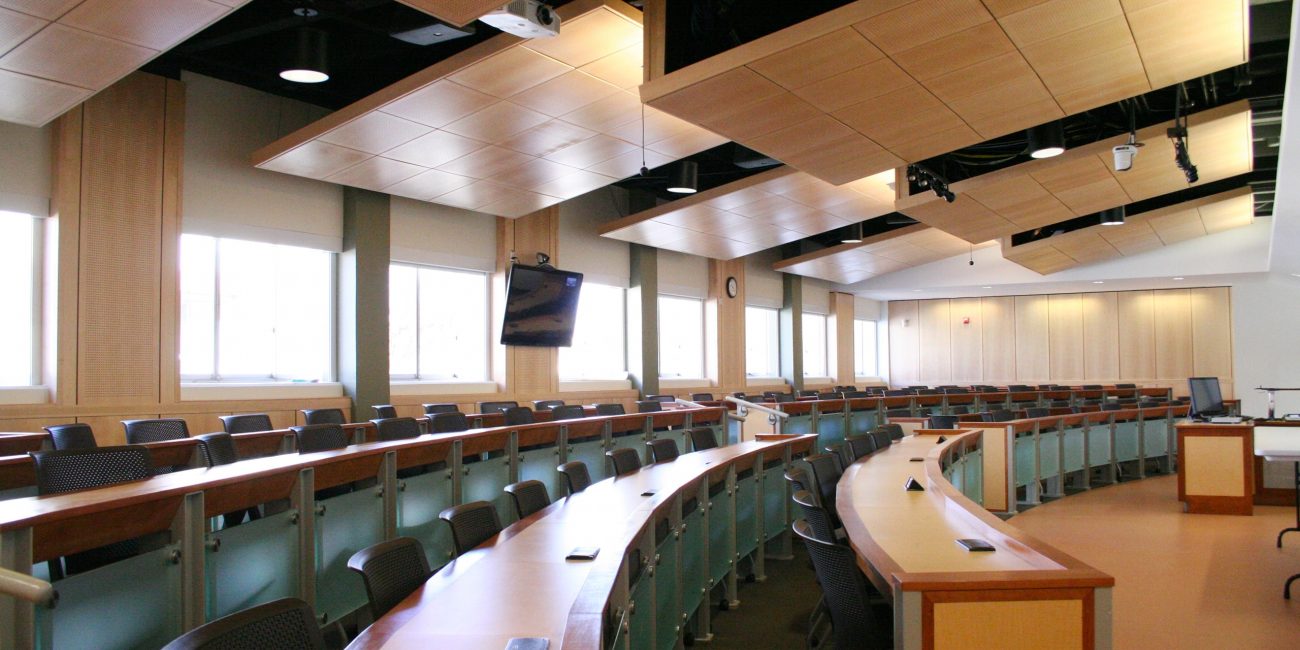
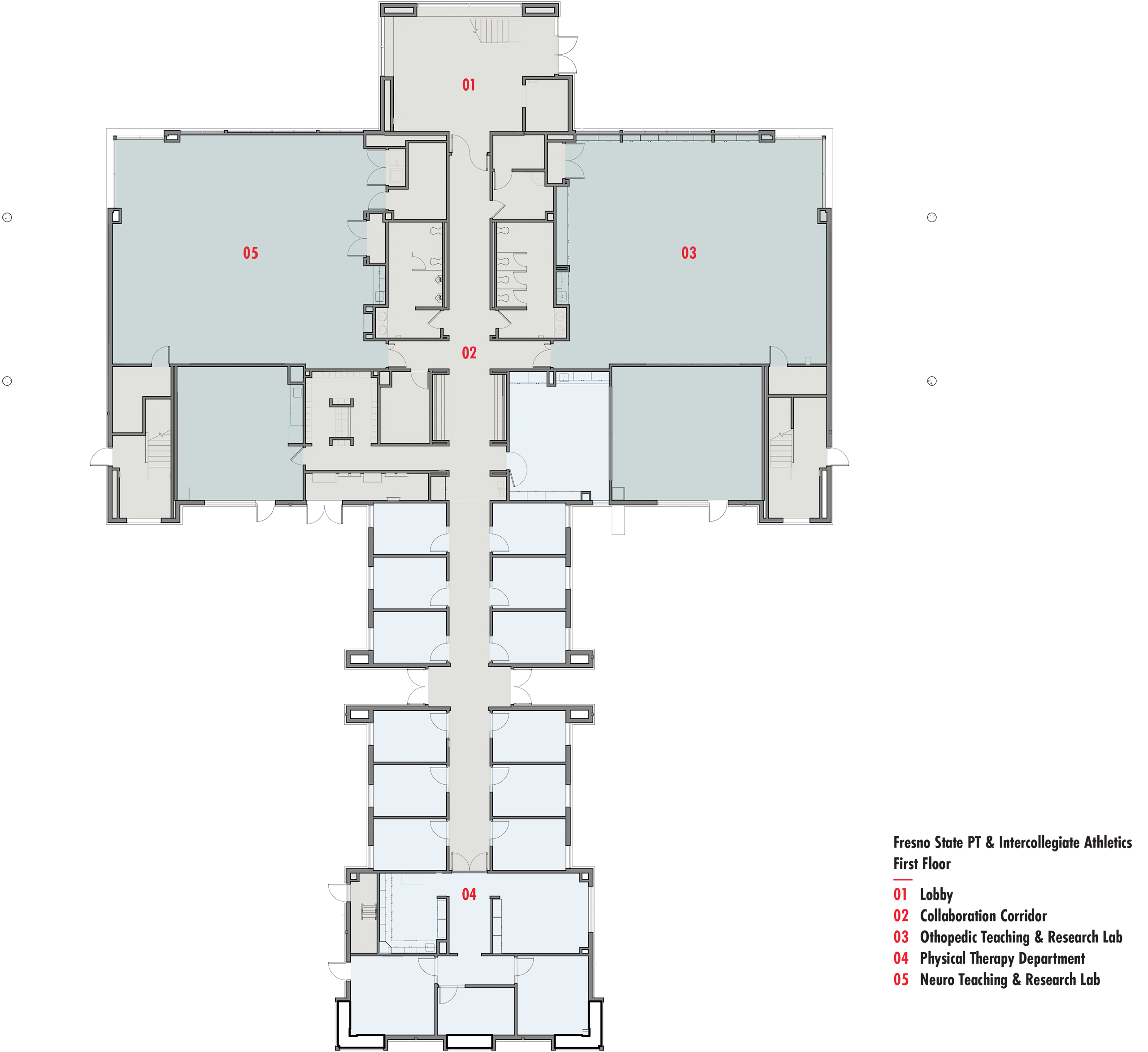
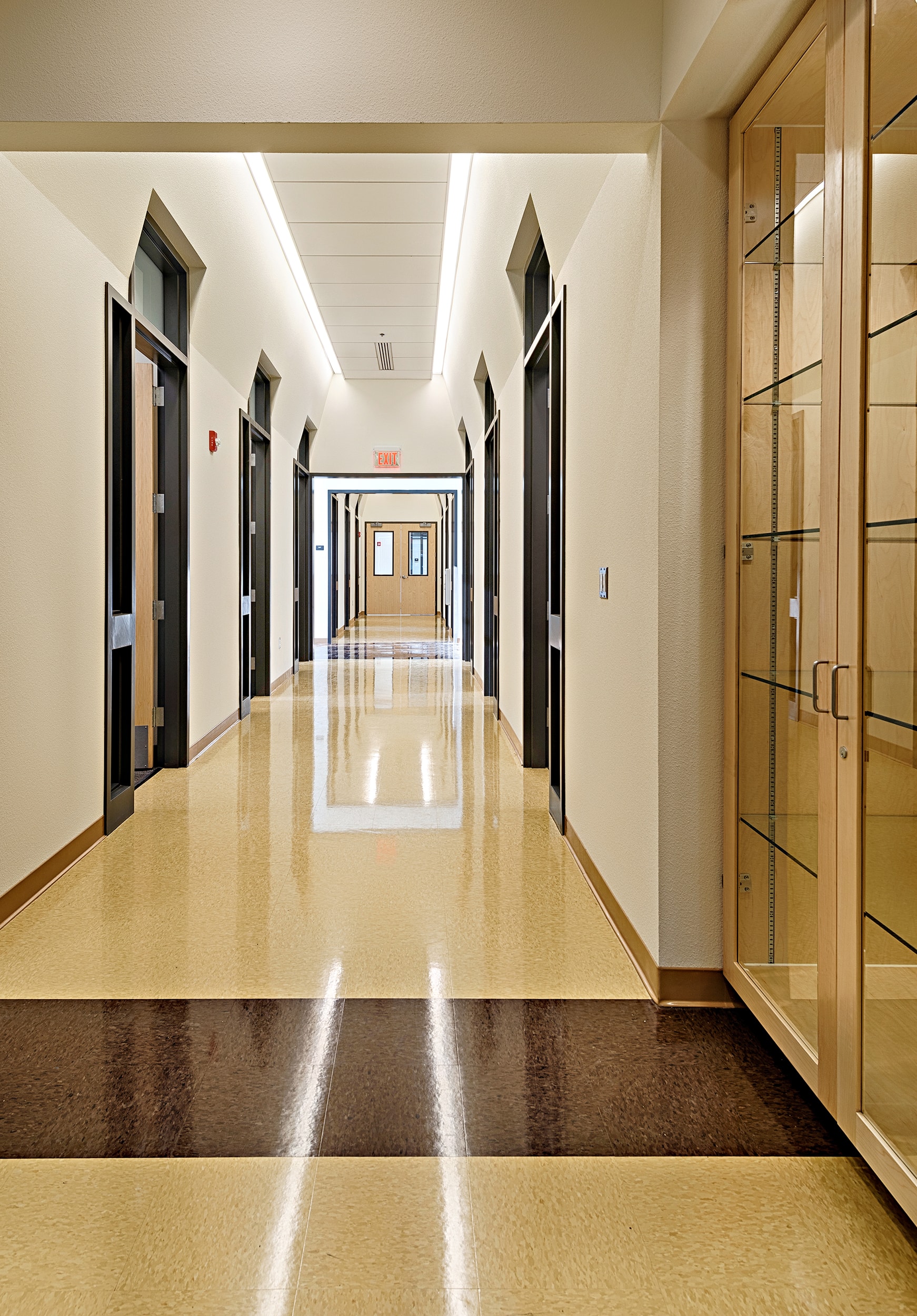
The $9.8M project was delivered using the Construction Management at Risk delivery method. The ground floor of this 22,500-square-foot building houses the Physical Therapy Department Office, twelve Faculty Offices, two large Research Labs, and both Graduate and Faculty Conference Rooms. To encourage interaction and collaboration, a broad Collaboration Hallway was designed between two flanks of offices where gait testing can be performed and observed by students and faculty. The second floor of the building has suites for Men’s Basketball, Women’s Basketball, Softball, and Volleyball, and is accessed by way of a grand lobby with interior stairs and elevators. On the second-floor landing, views of the Sierra Nevada foothills are captured as well as commanding perspectives of the campus. All offices have been designed with respect to Title IX requirements for gender equality in collegiate athletics. A courtyard that connects the PTIA to the North Gymnasium Complex functions as a much-needed outdoor amenity for students, student-athletes, and faculty to meet and interact.


2018 AIASJ Design Award Winner – Merit Award
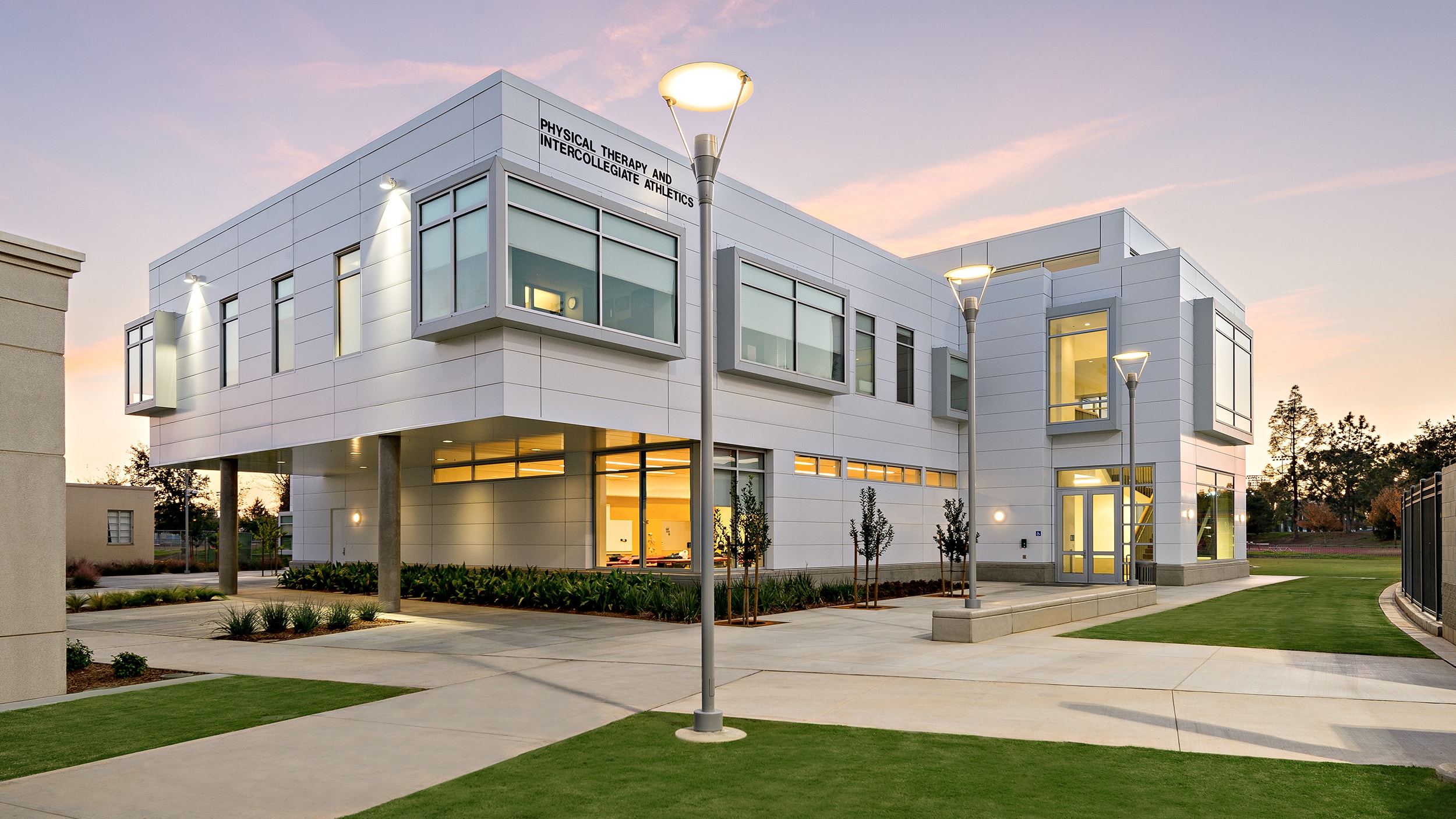
The North Gym and many of the adjacent early academic buildings are examples of classic International Style collegiate architecture. As the character for the PTIA was evolving, the architects chose to faithfully respect the architectural heritage of the North Gym and its neighbors. A steel moment frame structure was used to eliminate braces and free up the façade. Slender concrete columns support a boldly cantilevered second floor. Horizontal windows at the light monitors cut the façade along its entire length and evenly light the suite corridors below. The second-floor plan is free of the structural layout of the ground floor plan. White insulated metal wall panels with a smooth texture achieve a high-performing thermal envelope and ensure weather-tightness for the building that was designed to meet LEED Silver standards. These gestures were conscious and intentional nods to classic modernism and respect the character of the North Gym.
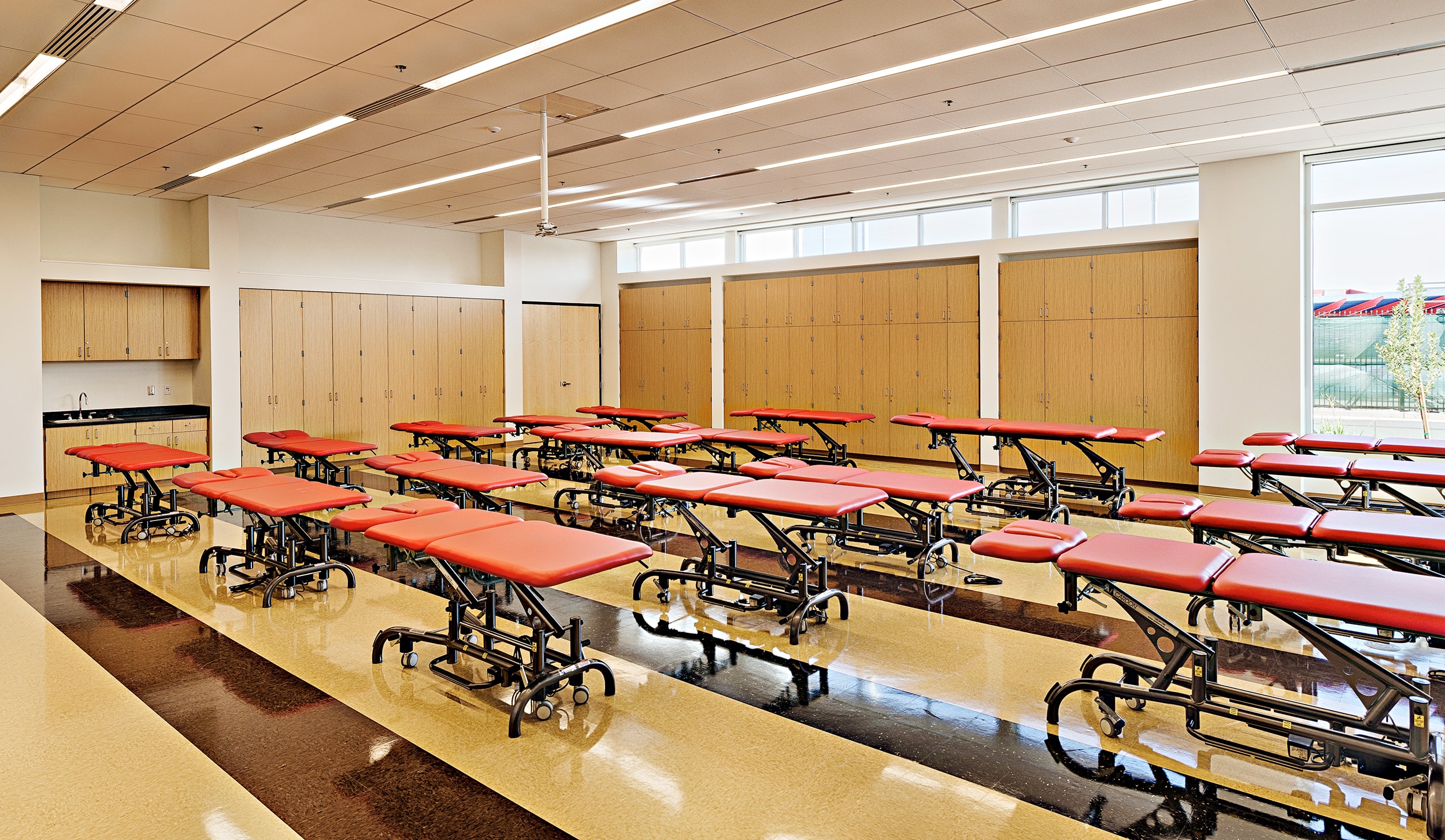
The ideal plan configuration for the Physical Therapy Department is a linear scheme which allows what is typically mundane circulation space to become the nexus of day-to-day interaction and collaboration between students and faculty. To animate the “Collaboration Corridor,” two custom-designed benches with built-in video monitors serve as a place for colleagues to linger and socialize or a place for members of the public who come to the University for physical therapy to wait in a lively and uplifting environment. A “lantern” allows daylight to flood the ground floor at the intersection between the Collaboration Corridor and the courtyard entrance to the building, further animating the corridor. The Graduate Conference Room opens onto a patio that serves as an outdoor social venue for the Physical Therapy Department.
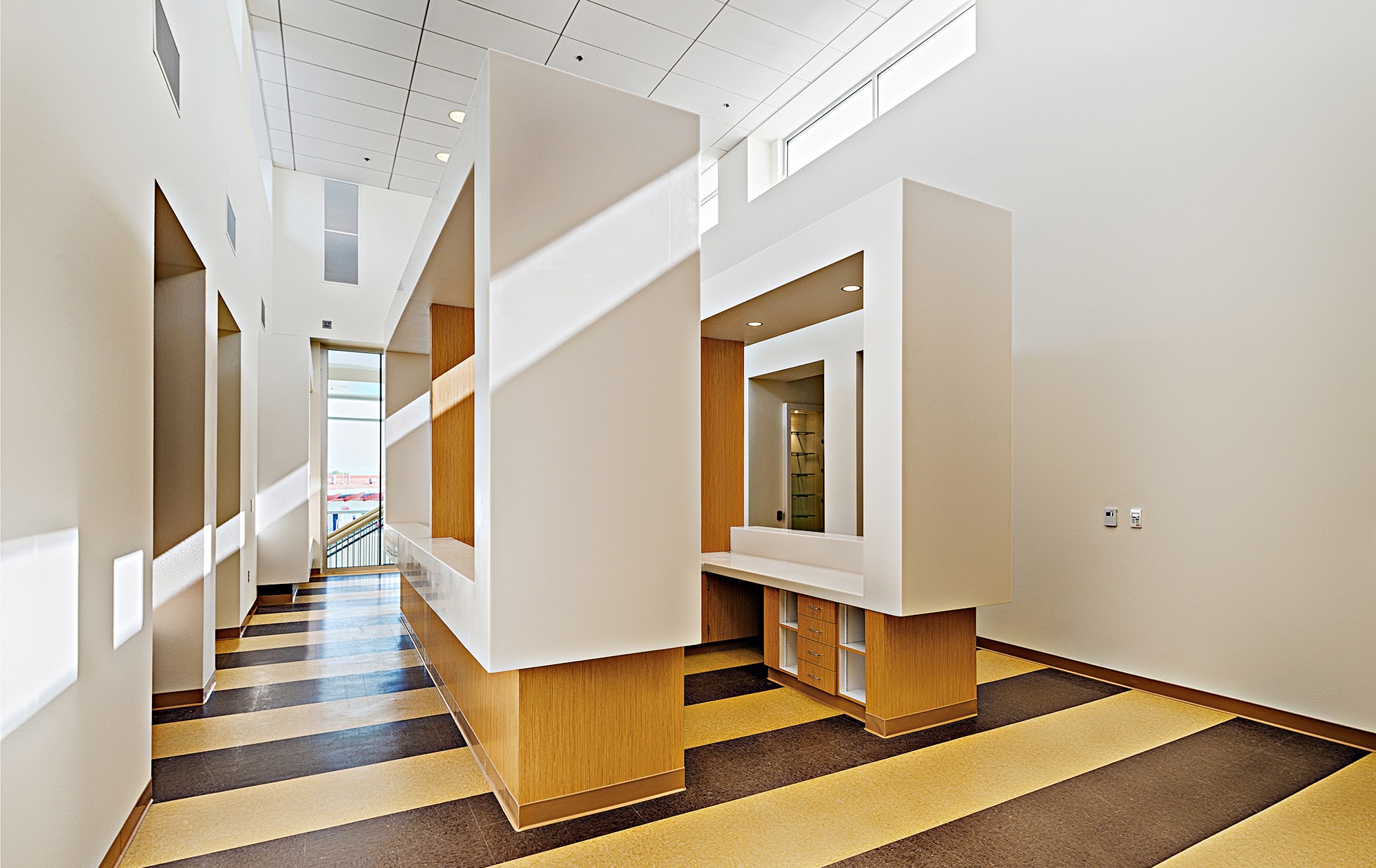
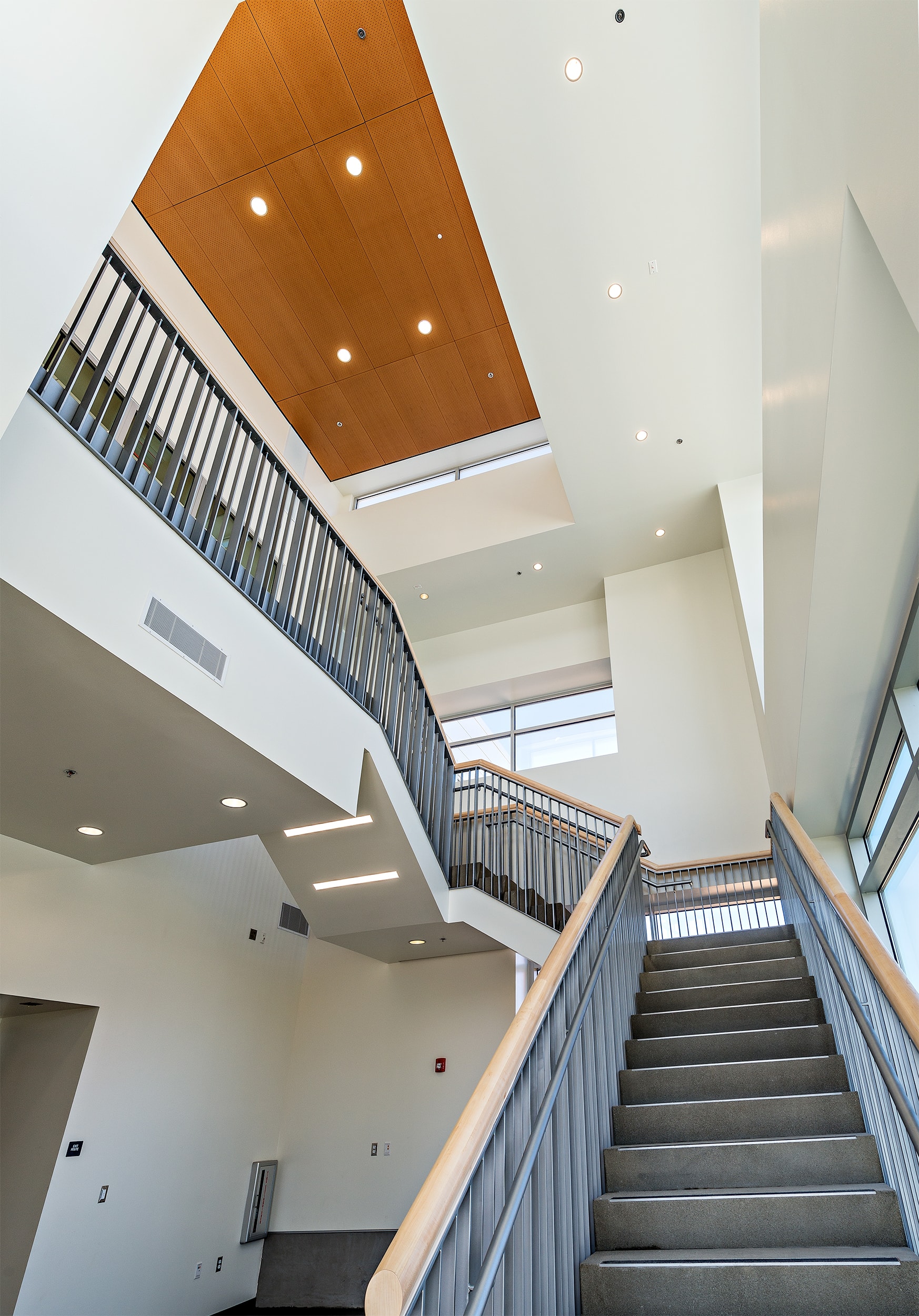
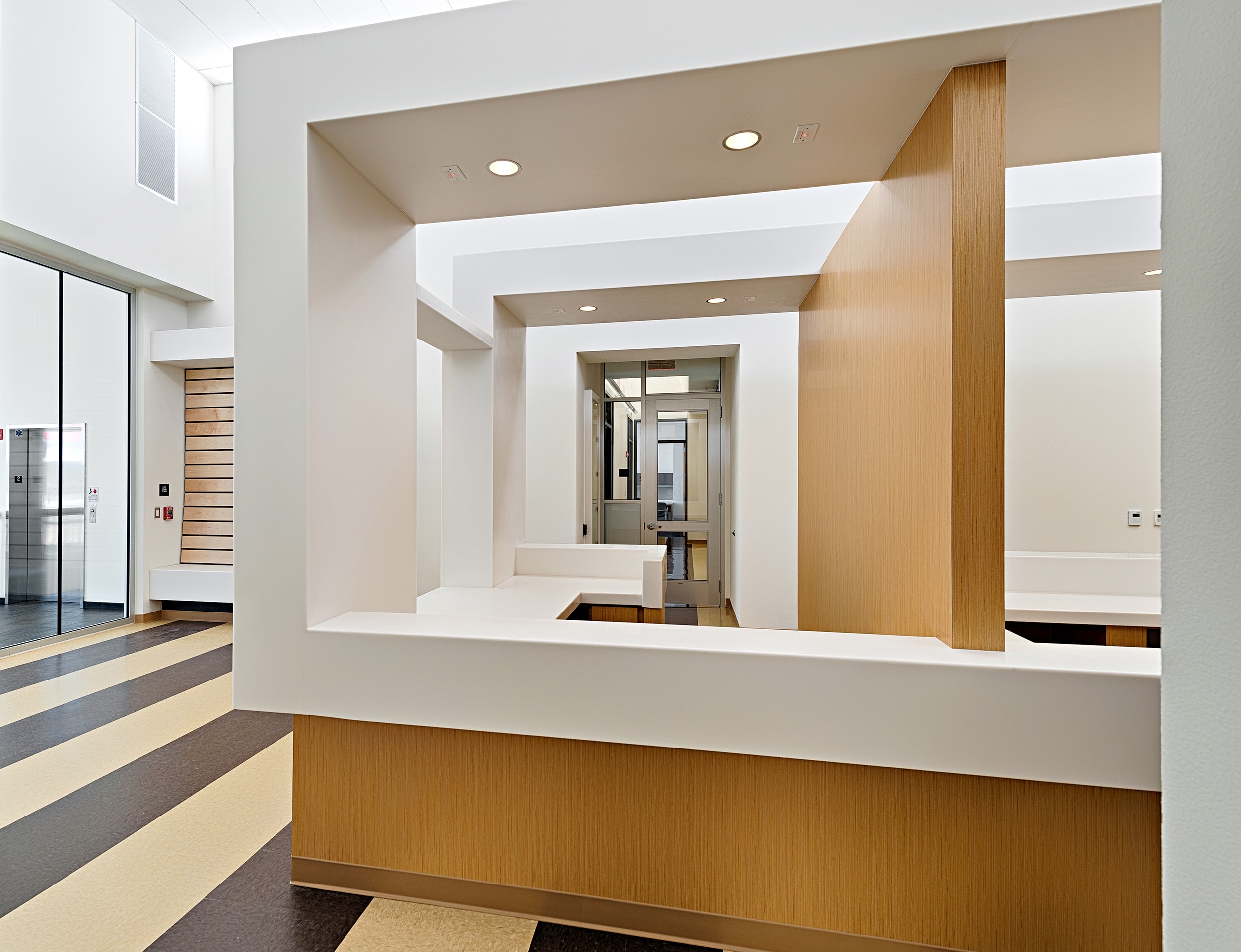
The Athletic Department program called for a more compact footprint and features individual suites for the teams housed in the building and general offices for the Athletic Department. A grand Reception Area, a student-athlete lounge and computer classroom on the second floor were designed to provide maximum access to daylight and views. A sculptural reception desk, monumental stair, built-in seating, and display cases were intentionally designed to convey a sense of restrained intensity and unambiguous excellence. These qualities enhance the building as a recruiting tool to attract top student-athletes to the University.
Each suite is organized around an internal corridor topped by a light monitor that floods the circulation space with natural light. Each individual office borrows light from the illuminated interior corridor to augment natural light from exterior windows to achieve a balanced interior light quality. Stringent area requirements are stipulated by the California State University System and to maximize the area of each office, the architects developed a prescriptive hierarchy to address the various organizational levels within the respective coaching staffs and provide additional useable space without increasing the mandated floor area. A deep sill at boxed windows of three different sizes project out beyond the skin of the building to create a metaphorical “trophy case” while providing an additional useable surface.
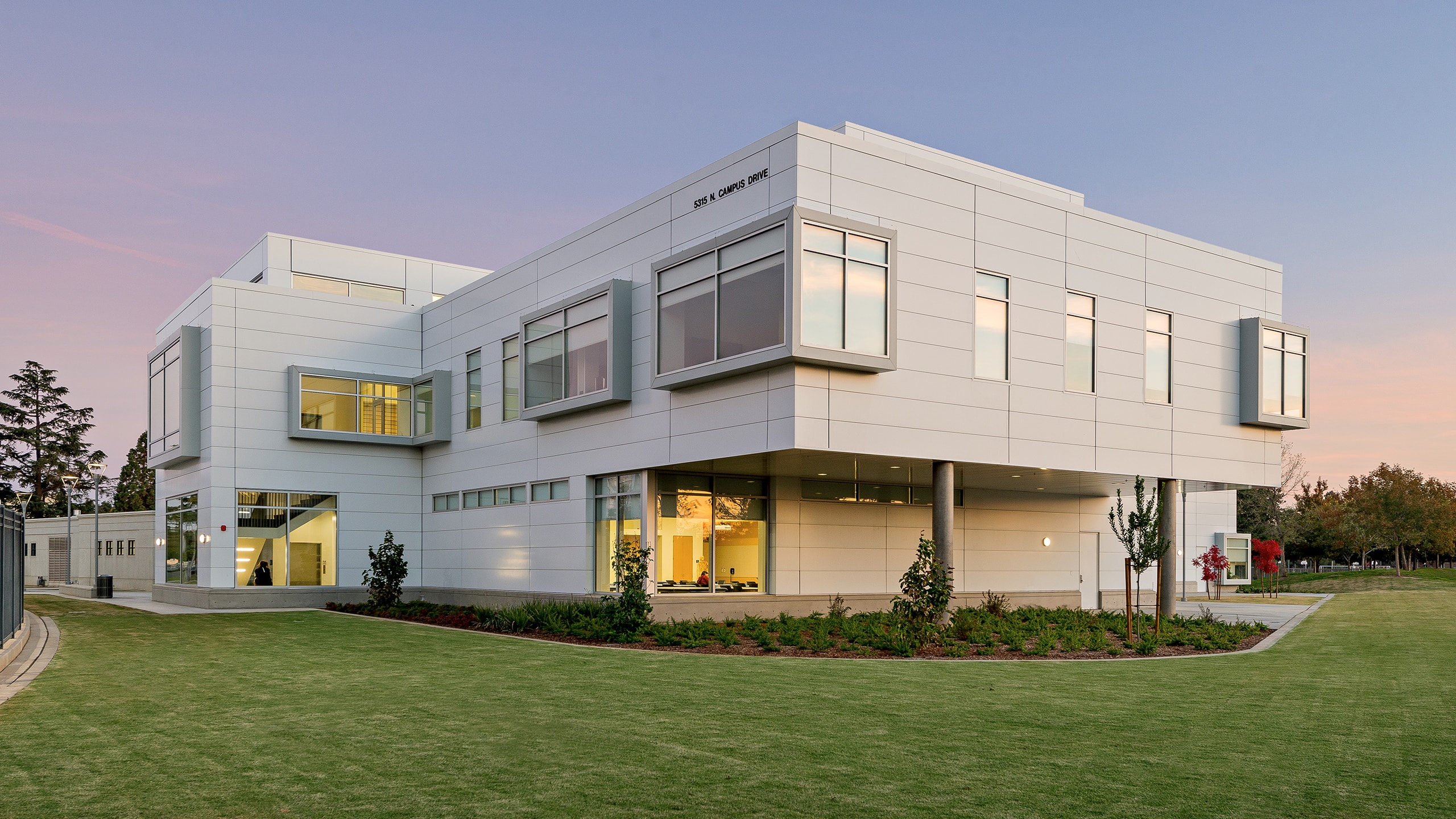
By respecting the existing character of the surrounding buildings, architecture was used as a means to blur the line between athletics and academics. This approach led to the creation of a building and open spaces that are tightly knitted into the campus’s infrastructure and seem to belong. At the PTIA, students, student-athletes, faculty, coaches, and the public are all welcome and experience Fresno State as a university characterized by the highest standards of excellence in academics, athletics—and architecture.